
Key Takeaways
Tendon tissue adapts fastest with a mix of progressive loading, adequate protein, and consistent daily habits, since complete rest alone can slow recovery.
Recovery moves through three exercise phases: isometric holds, eccentric loading like slow calf raises, then functional movements that build toward daily and sport demands.
Protein needs rise to 1.2 to 2.5 grams per kilogram of body weight daily, with adequate calories and carbohydrates fueling tissue repair.
Collagen (paired with vitamin C), omega-3 fatty acids, zinc, copper, and vitamin D support collagen formation, inflammation balance, and tissue repair.
Neuvera's Recovery & Repair Routine pairs BPC-157 + TB-500 and NAD+ oral dissolving strips, pre-measured with no needles, mixing, or refrigeration required.
What Affects the Pace of Tendon Recovery?
Tendon healing speeds up when exercise, nutrition, and daily habits work together to support tissue adaptation, not when you add more rest. A common misconception is that stopping activity entirely helps tendons recover faster, but tendons typically need appropriately managed loading to rebuild strength. Without that stimulus, the tissue can weaken further even as pain temporarily eases.
The right pace depends on how the tendon responds, not a fixed timeline. Progressing too quickly can flare irritation, while playing it too safe stalls the tissue's ability to build capacity. Watching how symptoms behave after activity, rather than following a generic schedule, guides safe progression.
For people who want extra support alongside a structured plan, Neuvera's Recovery & Repair Routine offers a straightforward daily add-on. Its BPC-157 + TB-500 and NAD+ oral dissolving strips slip into a morning or evening routine without needles, mixing, or refrigeration.
Supplements That Support Tendon Recovery
Many nutrients marketed for tendon support make big promises, but only a few have research behind them. These should not replace a structured rehabilitation program.
A daily wellness strip like Neuvera's is a different kind of addition: a format choice, not a supplement claim, and it should be treated separately from the nutrients below.

Collagen and vitamin C are often paired because vitamin C supports the body's natural collagen formation process.
Neuvera Recovery & Repair Routine
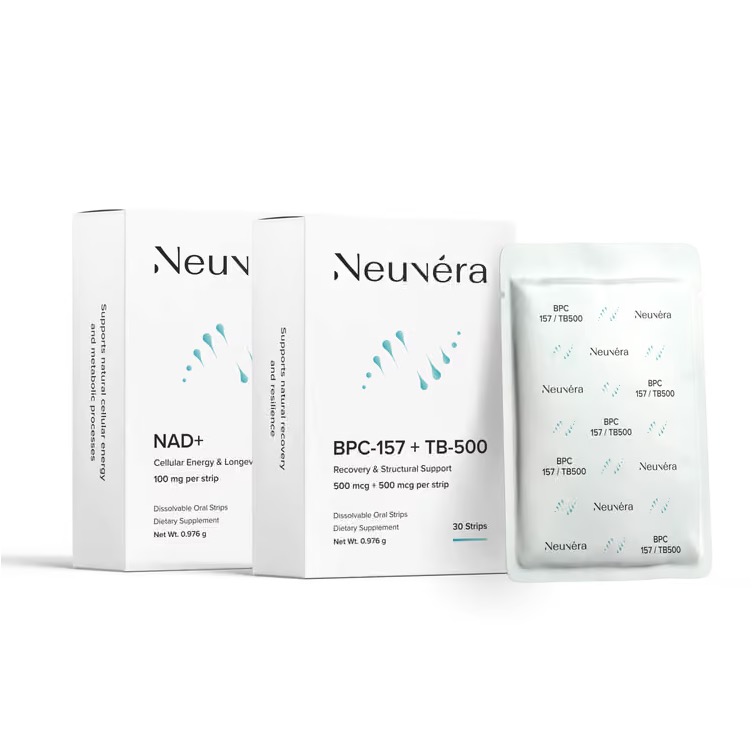
For a simple daily format, Neuvera's Recovery & Repair Routine combines BPC-157 + TB-500 and NAD+ oral dissolving strips. The routine includes 30 BPC-157 + TB-500 strips and 30 NAD+ strips, with each strip pre-measured for consistent daily use.
The BPC-157 + TB-500 strips contain 500 mcg of BPC-157 and 500 mcg of TB-500 per strip, while each NAD+ strip contains 100 mg. Neuvera lists a typical routine of one BPC-157 + TB-500 strip and one NAD+ strip daily.
Rather than requiring injections or preparation, these daily wellness strips dissolve under the tongue or against the inner cheek. Neuvera's RapidRelease™ Technology is designed to support mucosal absorption and bypass first-pass digestion, with the company reporting 92.5% absorption in its validation data.
For tendon-focused routines, BPC-157 + TB-500 are positioned around natural repair and recovery signaling, tissue maintenance, and structural balance, while NAD+ supports cellular energy metabolism, making the routine a convenient option for daily recovery support.
Collagen & Gelatin
Hydrolyzed collagen and vitamin C-enriched gelatin are among the most studied options for tendon support. Research suggests that taking collagen before rehabilitation exercise may help provide the amino acids needed for collagen production.
Vitamin C
Vitamin C plays an important role in collagen formation and helps support the processes involved in connective tissue structure. When combined with collagen or gelatin, it provides key nutrients involved in collagen synthesis.
Omega-3 Fatty Acids
Omega-3 fatty acids may help support a balanced inflammatory response during tendon recovery. Sources like fatty fish and fish oil provide EPA and DHA, which are commonly studied for their role in managing inflammation and supporting overall tissue health.
Zinc, Copper, and Vitamin D
Micronutrients are essential vitamins and minerals that support many bodily functions, including normal tissue repair and bone health. For example, zinc supports cell growth and repair, copper supports collagen formation, and vitamin D supports healthy muscle growth and bone health. Getting enough of these nutrients through a balanced diet, or supplementation when needed, can help support overall recovery.
The Best Exercises to Speed Up Tendon Healing
Exercise plays a major role in tendon recovery. The key is choosing the right exercise for the stage of recovery. Too much stress too soon can slow progress, while too little movement can limit tendon adaptation.

Recovery exercises should match the stage of healing, beginning with gentle movements before progressing to more challenging activities.
The Three Phases of Tendon Exercise Progression
Phase 1: Isometric Loading: Isometric exercises involve holding a muscle contraction without changing the joint position or muscle length.
Phase 2: Eccentric and Isotonic Loading: Eccentric and isotonic exercises involve controlled muscle contractions through movement, including lengthening and shortening under tension.
Phase 3: Functional Loading: Functional exercises increase resistance and movement demands to help the tendon tolerate the activities required in daily life, exercise, or sport.
Isometric Exercises: Static Tendon Loading
Isometric exercises involve holding a muscle contraction without moving the joint. They can be useful early in a progressive loading program because they load the tendon without repeated joint movement.
However, their effect on pain varies by individual, so they should be one part of a broader loading program. Common examples include wall sits, planks, and quad sets.
Eccentric Exercises: Controlled Tendon Loading
Eccentric exercises involve slowly lengthening a muscle while it remains under tension. They are commonly used in tendon rehabilitation and can be progressed by gradually increasing resistance as the tendon's capacity improves.
A common example is an eccentric calf raise. Stand on the edge of a step, rise onto your toes, then slowly lower your heels below the step level. The controlled lowering movement places tension on the tendon while gradually challenging its capacity.
Progressing Your Tendon Loading: Gradual Increases in Capacity
Tendon strengthening should progress gradually according to your current capacity and how the tendon responds to exercise. Start with a manageable level of resistance, then gradually increase the load, repetitions, movement demands, or exercise complexity as your tolerance improves.
Progression may eventually include heavier resistance, faster movements, and activity-specific exercises. If symptoms consistently worsen or remain elevated after exercise, reduce the load or seek guidance from a qualified healthcare professional.
The Diet That Supports Tendon Repair
Protein for Tendon Healing
Protein plays an important role in maintaining muscle and supporting tissue repair. During tendon recovery, many guidelines recommend increasing protein intake based on activity level and recovery demands.
Protein intake recommendations range from 1.2–2.5 grams per kilogram of body weight per day. Good protein sources include lean meats, fish, eggs, dairy, legumes, and plant-based proteins.
Calories & Carbohydrates for Recovery
Adequate calorie intake is important during tendon recovery because your body needs enough energy to support tissue repair, particularly when activity levels change. Carbohydrates provide energy for exercise and daily activity, while foods such as whole grains, potatoes, fruits, vegetables, and legumes can help meet your energy needs.
Build a Consistent Tendon Recovery Routine with Neuvera
A consistent routine is the foundation of long-term wellness. Neuvera makes daily support simple with convenient oral dissolving strips.
Tendon healing responds best to a steady combination of progressive exercise, solid nutrition, and habits you can actually maintain over time. Chasing a single fix or rushing the timeline tends to backfire, while consistency across all three areas creates the best environment for the tissue to adapt and strengthen.
We built Neuvera's Recovery & Repair Routine to make that consistency easier, pairing BPC-157 + TB-500 and NAD+ oral dissolving strips in a pre-measured, portable format. No mixing, needles, or refrigeration needed. Try Neuvera's Recovery & Repair Routine to support your daily habits.
Frequently Asked Questions (FAQs)
How long does it take for a tendon to heal?
Tendon healing varies from person to person. Recovery depends on factors such as injury severity, age, overall health, nutrition, sleep, and how consistently you follow rehabilitation. Some injuries recover within weeks, while others may take several months. Staying consistent with a structured recovery plan is more important than focusing on the timeline.
Can you speed up tendon healing naturally?
While there is no instant solution, you can support tendon recovery through healthy habits. A combination of progressive exercise, a balanced diet, quality sleep, and appropriate nutritional support creates the best environment for healing and long-term tendon strength.
Does walking help heal tendon injuries?
For many tendon injuries, gentle walking can help you stay active without placing too much stress on the tendon. However, walking should complement a structured rehabilitation program, not replace it. Pay attention to your symptoms and avoid activities that increase discomfort.
Does collagen help tendon healing?
Collagen may help support tendon recovery by providing amino acids involved in collagen formation, especially when combined with regular rehabilitation exercises and a nutrient-rich diet. It works best as part of a well-rounded recovery plan rather than as a standalone solution.
Can Neuvera's Recovery & Repair Routine complement tendon recovery?
Neuvera's Recovery & Repair Routine can fit into a consistent daily wellness habit alongside exercise, nutrition, and healthy routines. Its BPC-157 + TB-500 and NAD+ oral dissolving strips offer a convenient, pre-measured format without needles or preparation.
Disclaimer: The information in this article is for general informational purposes only and is not intended as medical advice, diagnosis, or treatment. Neuvera's products are not pharmaceutical products. Individual results may vary. Always consult a qualified healthcare professional before starting any new wellness routine.
Written by Cody Nickson
READY TO CHOOSE?
Find your daily strip routine.
Answer one simple question: what are you building around? Then compare Neuvéra routines by goal.