

Key Takeaways
NAD+ is a coenzyme that fuels ATP production, while MOTS-C is a signaling peptide that helps cells respond to metabolic stress and energy demand.
NAD+ powers the electron transport chain and activates sirtuins, supporting DNA repair, mitochondrial function, and cognitive performance as levels decline with age.
MOTS-C activates AMPK, the body's main energy-sensing pathway, improving metabolic flexibility and helping cells adapt during exercise and metabolic stress.
NAD+ and MOTS-C work through complementary pathways, since MOTS-C's signaling depends on healthy cellular NAD+ levels to function properly.
Neuvéra's NAD+ oral dissolving strips deliver 100 mg per strip with a validated 92.5% absorption rate and no needles, mixing, or refrigeration required.
Why Aren't NAD+ & MOTS-C Interchangeable?
NAD+ and MOTS-C aren't interchangeable, since each handles a separate stage of mitochondrial energy. NAD+ is the coenzyme that drives ATP production itself, while MOTS-C is the signaling peptide that directs how cells put that energy to use. People often shop for one as a substitute for the other, missing that each targets a separate stage of cellular energy.
Choosing the wrong one can leave a wellness routine underperforming. Someone with low baseline NAD+ who starts with MOTS-C may not see much change, since MOTS-C's signaling depends on adequate NAD+ to begin with. Matching the compound to the actual gap, whether it's raw energy production or metabolic signaling, makes the difference between a routine that works and one that doesn't.
For most people, NAD+ is the foundational layer to address first. Neuvéra's NAD+ oral dissolving strips make that starting point simple, delivering a pre-measured dose without needles, mixing, or refrigeration.
What Is NAD+ and How Does It Work?
NAD+ (nicotinamide adenine dinucleotide) is a naturally occurring coenzyme found in every cell. It helps convert nutrients into ATP, the energy your cells use to function. Beyond energy production, NAD+ also supports metabolism, cellular signaling, and DNA maintenance, making it essential for overall cellular health.

NAD+ plays a central role in cellular energy production by helping mitochondria convert nutrients into ATP, the energy that powers everyday cellular functions.
NAD+ Is a Coenzyme, Not a Peptide
NAD+ is a coenzyme, not a peptide or stimulant. It works with enzymes to transfer electrons during metabolic reactions, cycling between NAD+ and NADH to support efficient energy production and maintain normal cellular function.
NAD+ Fuels the Electron Transport Chain
Inside the mitochondria, NAD+ accepts electrons from nutrients and becomes NADH. NADH then delivers those electrons to the electron transport chain, where they help produce ATP. Without enough NAD+, this natural energy-producing process becomes less efficient.
NAD+ Levels Drop With Age
NAD+ levels naturally decline with age as the body becomes less efficient at producing and recycling it. At the same time, enzymes that consume NAD+ become more active, reducing its availability. Lifestyle factors like poor sleep, chronic stress, and inactivity may also contribute to this decline.
Sirtuins, DNA Repair, and the Aging Connection
NAD+ activates sirtuins, a group of proteins that support DNA maintenance, stress response, and mitochondrial health. This is why researchers focus on NAD+ when studying cellular health and healthy aging.
What Is MOTS-C and How Does It Work?
MOTS-C (mitochondrial open reading frame of the 12S rRNA-c) is a naturally occurring peptide made of 16 amino acids. Unlike most peptides, it comes from mitochondrial DNA, not nuclear DNA. It signals cells to respond to metabolic stress and supports healthy mitochondrial function.
MOTS-C Originates Inside Your Mitochondria
Unlike most peptides, MOTS-C is produced from the mitochondrial genome. It can move from the mitochondria to the cell nucleus, where it helps regulate genes involved in metabolism and cellular stress responses.
MOTS-C Activates AMPK & Improves Metabolic Signaling
MOTS-C primarily works by activating AMPK, one of the body's main energy-sensing pathways. This signaling supports healthy energy metabolism, efficient fuel use, and normal mitochondrial function, helping cells adapt to changing energy demands.
MOTS-C as an Exercise Mimetic
MOTS-C is an exercise mimetic because it activates some of the same cellular pathways triggered by physical activity. It is not a replacement for exercise, but it may support the body's natural metabolic response to physical activity, making it an emerging area of interest in mitochondrial and longevity research.
NAD+ vs MOTS-C: Core Differences
Target Pathways
NAD+ is essential for ATP production and supports proteins called sirtuins, which play important roles in cellular maintenance, mitochondrial function, and DNA repair. Because every cell relies on NAD+, it underpins healthy energy metabolism.
MOTS-C helps regulate cellular metabolism by activating AMPK, one of the body's primary energy-sensing pathways. It may activate some of the same metabolic pathways associated with exercise, making it an active area of interest in mitochondrial and longevity research.
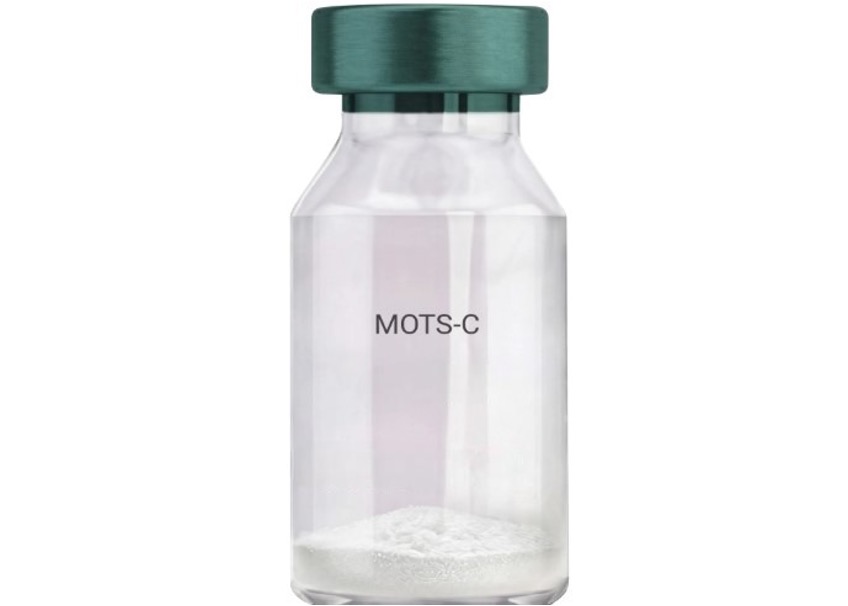
MOTS-C is encoded by mitochondrial DNA, highlighting the mitochondria's role as both an energy producer and a cellular signaling center.
Energy Efficiency
NAD+ supports efficient energy metabolism by carrying electrons during metabolic reactions and helping generate NADH, which supplies electrons for mitochondrial ATP production. MOTS-C appears to influence how efficiently mitochondria respond to energy demands.
In preclinical research, MOTS-C administration has been studied for its effects on skeletal-muscle mitochondrial bioenergetics, with associated changes noted in oxidative phosphorylation efficiency, mitochondrial integrity, and oxidative stress markers.
Exercise Energy Demands
MOTS-C is closely connected with exercise-related metabolic adaptation. Research suggests its expression responds to exercise and metabolic stress, while experimental MOTS-C administration has been associated with changes in skeletal-muscle stress responses and metabolic adaptation to exercise.
NAD+ metabolism also responds to exercise. Studies reviewed in the NAD+ literature show that exercise can increase skeletal-muscle NAMPT, an enzyme involved in NAD+ production, linking NAD+ availability with the body's response to increased energy demand.
Energy Homeostasis
Both NAD+ and MOTS-C are associated with maintaining cellular energy balance, but their roles differ. NAD+ provides a key coenzyme required for energy-producing metabolic reactions, while MOTS-C acts more as a stress-responsive metabolic signal that influences AMPK and other pathways involved in energy homeostasis.
The Overlap
Although they work differently, MOTS-C and NAD+ are closely connected. Mitochondria rely on adequate NAD+ to function, meaning MOTS-C depends on healthy cellular NAD+ levels to carry out its signaling role.
Benefits of NAD+ & MOTS-C
Benefits of NAD+ for Cellular Energy & Healthy Aging
NAD+ supports cellular energy, cognitive function, and healthy aging. As a coenzyme, it helps power ATP production while activating sirtuins, proteins involved in DNA maintenance, mitochondrial health, and cellular stress responses.
By supporting these essential processes, healthy NAD+ levels may also help maintain mental clarity, focus, physical recovery, and endurance as part of a consistent daily wellness routine.
Benefits of MOTS-C for Metabolic Health & Energy Regulation
MOTS-C supports metabolic health and energy regulation by activating AMPK, one of the body's primary energy-sensing pathways. This helps cells respond to changing energy demands, improve metabolic flexibility, and use glucose and fats more efficiently.
MOTS-C supports healthy mitochondrial function and activates exercise-related metabolic pathways, making it a growing focus in wellness and healthy aging.
Benefits of Combining NAD+ & MOTS-C
NAD+ and MOTS-C are not competing compounds; they work through complementary pathways. Together, they provide a more complete approach to supporting healthy mitochondrial function, making them a popular pairing in science-informed wellness routines.
NAD+ vs. MOTS-C: Comparison Table
Feature | NAD+ | MOTS-C |
|---|---|---|
Compound Type | Naturally occurring coenzyme | Naturally occurring mitochondrial peptide |
Primary Role | Supports cellular energy production | Regulates metabolic signaling |
How It Works | Helps produce ATP and activates sirtuins | Activates AMPK to help cells adapt to changing energy demands |
Primary Benefits | Supports cellular energy, cognitive function, DNA maintenance, and healthy aging | Supports metabolic flexibility, energy regulation, and healthy mitochondrial function |
Focus Area | Cellular energy output and repair | Metabolic health and efficient fuel utilization |
Exercise Connection | Supports energy needed for physical activity | Activates pathways associated with exercise-related metabolism |
Relationship | Provides the cellular foundation for mitochondrial function | Depends on healthy NAD+ levels to support its signaling role |
Support Your Cellular Energy Foundation with Neuvéra
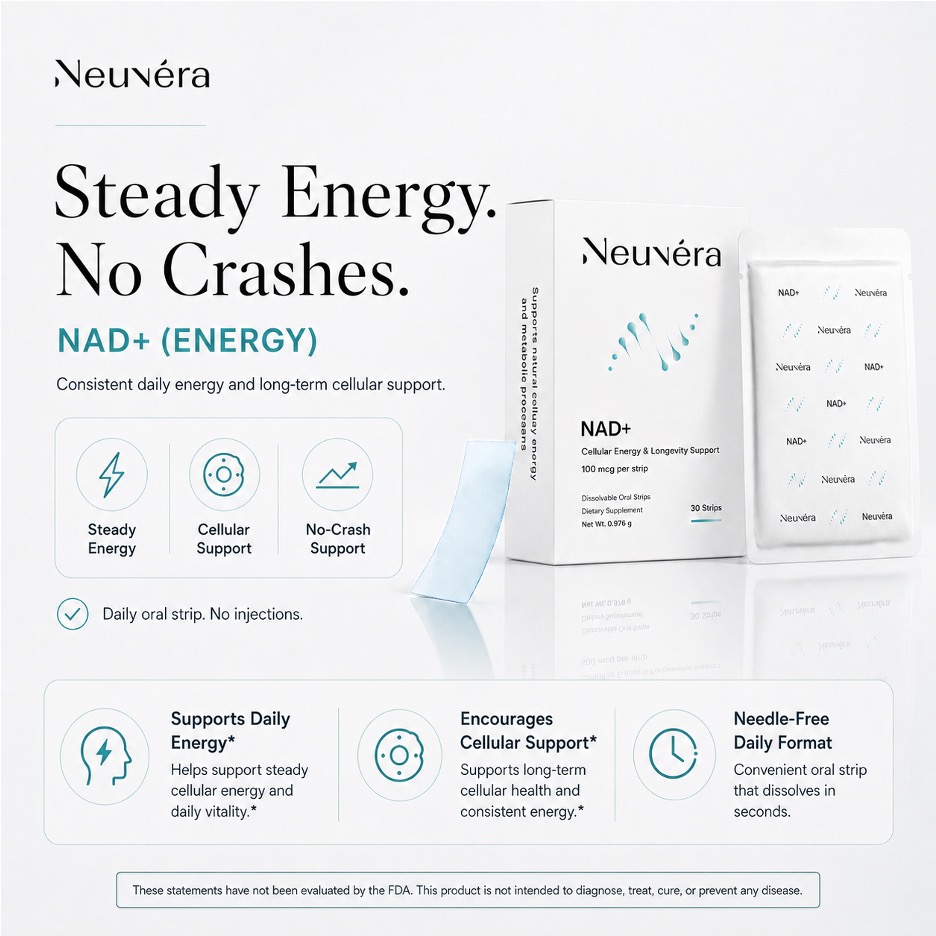
Neuvera makes advanced wellness simple with oral dissolving strips designed to fit seamlessly into your everyday routine.
NAD+ and MOTS-C serve different roles in mitochondrial health, and knowing which one addresses your actual gap matters more than picking whichever is trending. NAD+ builds the baseline energy production your cells need, while MOTS-C fine-tunes how that energy gets used. Most routines benefit from starting with the foundation before adding the signal.
If NAD+ fits your goals, we make daily use simpler with pre-measured Neuvéra NAD+ oral strips. Our RapidRelease™ technology has a validated 92.5% absorption rate and 5–15 minute onset, with no mixing, measuring, or refrigeration required. Browse our NAD+ oral dissolving strips to learn more.
Frequently Asked Questions (FAQs)
Can you take NAD+ and MOTS-C at the same time?
Yes. NAD+ and MOTS-C support mitochondrial health through different but complementary pathways, so you can use them together as part of a wellness routine. NAD+ helps support cellular energy production, while MOTS-C supports metabolic signaling. If you're considering combining them, consult a qualified healthcare professional for personalized guidance.
How quickly does NAD+ take to work?
The timeline varies from person to person. Factors such as your current NAD+ levels, delivery format, lifestyle, and overall health can all influence the experience. Supporting healthy NAD+ levels is intended to complement your body's natural cellular processes, so consistency is generally more important than expecting immediate results.
Is MOTS-C natural or synthetic?
MOTS-C is a naturally occurring peptide produced by the mitochondria. The versions used in wellness and research settings are created to match the body's natural peptides. MOTS-C differs from both traditional pharmaceutical drugs and conventional dietary supplements, and should be used under the guidance of a qualified healthcare professional.
Why does NAD+ decline with age?
NAD+ levels naturally decline with age as the body becomes less efficient at producing and recycling it. Lifestyle factors such as chronic stress, poor sleep, and inactivity may also reduce NAD+ availability over time, making healthy daily habits an important part of supporting cellular wellness.
What should you look for in an NAD+ or MOTS-C wellness product?
When choosing an NAD+ product, consider the dosage, delivery method, absorption, ingredient transparency, and how easily it fits into daily use. Neuvéra NAD+ oral strips provide 100 mg per pre-measured strip and use RapidRelease™ technology, with no mixing, measuring, water, or refrigeration required.
Disclaimer: The information in this article is for general informational purposes only and is not intended as medical advice, diagnosis, or treatment. Neuvéra's products are not pharmaceutical products. Individual results may vary. Always consult a qualified healthcare professional before starting any new wellness routine.
Written by Cody Nickson
READY TO CHOOSE?
Find your daily strip routine.
Answer one simple question: what are you building around? Then compare Neuvéra routines by goal.