
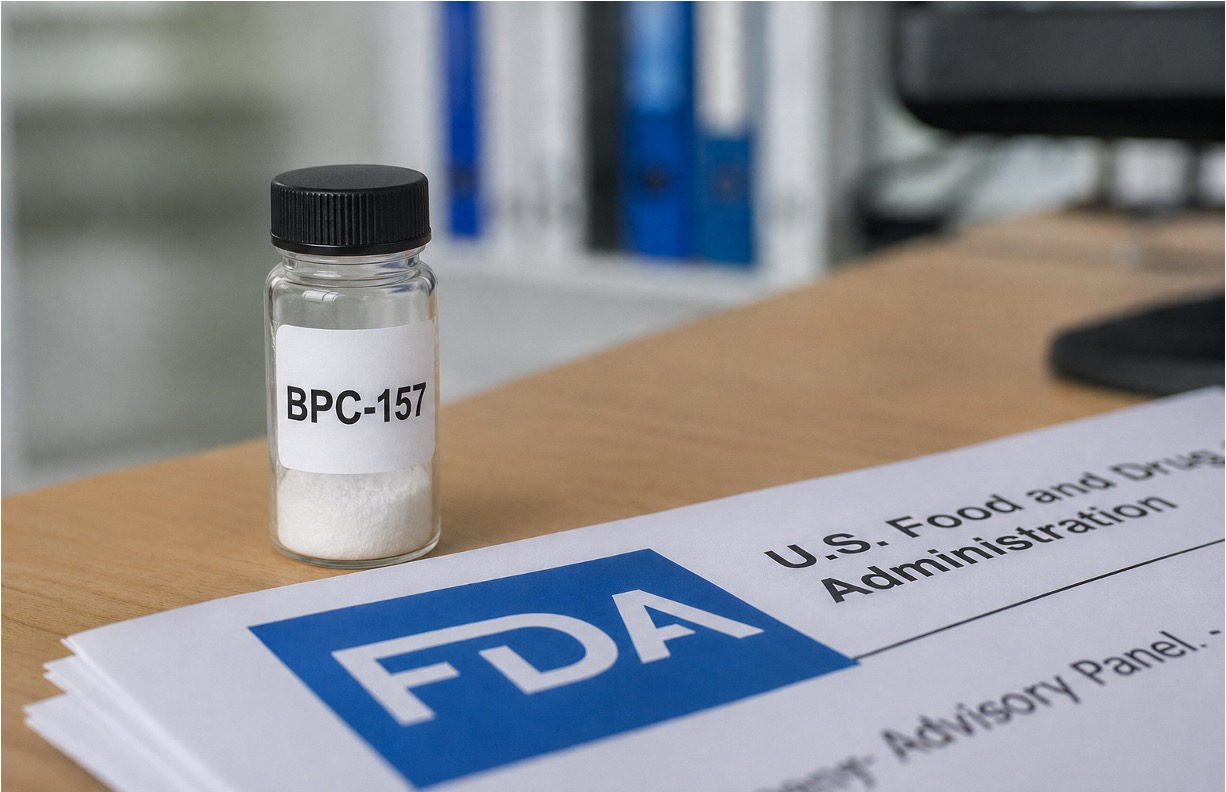
BPC-157 FDA Status: What Does the July 2026 Advisory Panel Vote Actually Mean?
Find out what the July 2026 FDA advisory panel vote on BPC-157 actually means, the 8-6 recommendation, what it does not change, and what happens next.
Key Takeaways
On July 23, 2026, an FDA advisory committee voted 8 to 6 to recommend BPC-157 for inclusion on the Section 503A bulk drug substances compounding list, a meaningful step toward structured compounding access.
The vote reflects growing recognition of BPC-157's animal research base across tissue repair, gut healing, and tendon recovery, though well-controlled human clinical trials are still limited.
If the FDA acts on the recommendation, qualifying Section 503A compounding pharmacies could use BPC-157 as a bulk ingredient in patient-specific preparations filled by prescription.
Nothing changes in practice until the FDA takes formal action, so the current regulatory status of BPC-157 stays as it was before the vote.
Neuvera offers BPC-157 and TB-500 as pre-measured oral dissolving strips with 92.5 percent absorption, no needles, no mixing, and no refrigeration, built to keep a daily wellness routine simple.
The FDA Just Voted on BPC-157, Here Is What Actually Happened
On July 23, 2026, the Pharmacy Compounding Advisory Committee (PCAC) voted 8 to 6, with 1 abstention, to recommend that BPC-157 be placed on the list of bulk drug substances that may be used by qualifying Section 503A compounding pharmacies.
The vote follows the FDA's removal of BPC-157 from its Category 2 high-risk list in late April 2026, which cleared the way for the committee to consider it at all. While it moves the conversation forward regarding the limitations surrounding BPC-157, it is not drug approval.
What Section 503A Compounding Actually Means
Section 503A of the Federal Food, Drug, and Cosmetic Act allows licensed pharmacists and physicians to compound drugs for individual patients when certain conditions are met. One of those conditions is that any bulk drug substance used must either comply with an applicable USP or NF monograph or be a component of an FDA-approved drug product.
Another condition is that it should appear on a specific list of bulk drug substances maintained by the FDA, which is what the committee was recommending BPC-157 for. BPC-157 was the first of seven peptides reviewed at the meeting, with KPV, TB-500, and MOTS-c also recommended for the same 503A list.
If the FDA follows through, it would mean qualifying Section 503A compounding pharmacies could potentially use BPC-157 as a bulk ingredient in patient-specific compounded preparations. Compounded drugs are generally not FDA-approved. They are prepared for specific patients based on a prescription, and they are not required to go through the same pre-market approval process that FDA-approved drugs do.
The legal framework exists to serve patients with specific clinical needs that approved drugs cannot meet, not as a workaround for broader commercial distribution.
The Committee Was Split 8-6 in the BPC-157 FDA Vote
The Case Made by the 8 Votes in Favor
Reporting from the meeting indicates that members voting in favor generally judged the risks associated with BPC-157 to be minimal, with at least one citing medical freedom as part of his rationale. BPC-157 has been studied across a wide range of animal models with consistent findings around tissue repair, gut mucosal healing, tendon and ligament recovery, and anti-inflammatory activity.
While human clinical trials are limited, some committee members saw the volume and consistency of the animal data as sufficient to support compounding eligibility, particularly given that compounding under 503A is patient-specific and prescription-based, not mass-market distribution.

The vote moves the compounding discussion forward, but the FDA still must take its own formal action before anything changes in practice.
The Case Made by the 6 Votes Against
The six opposing votes centered on the human evidence gap that the favorable votes were willing to work around. For those members, the absence of well-controlled human clinical trials was a foundational problem. Approving a substance for compounding-list inclusion based primarily on animal data sets a precedent that some committee members were not comfortable with.
What the BPC-157 FDA Vote Means
BPC-157 Is Not an FDA-Approved Drug
BPC-157 has no FDA-approved indication. It has not completed the clinical trial process required for drug approval. No New Drug Application (NDA) for BPC-157 has been approved by the FDA. The advisory committee vote concerned compounding-list eligibility only, which is a separate and lower regulatory bar than full drug approval.
However, this is not a criticism of BPC-157's potential. The research in animal models is genuinely compelling across a range of applications. It is simply an accurate description of where the regulatory process currently stands.
No Retail Product Became Approved Because of This Vote
No BPC-157 supplement, capsule, nasal spray, oral strip, or injectable product sold through any retail or online channel became FDA-approved on July 23, 2026.
The committee's recommendation, even if fully adopted by the FDA, would apply only to licensed compounding pharmacies operating under Section 503A for individual patient prescriptions.
What Happens Next After an Advisory Vote
The FDA Reviews the Recommendation and Scientific Record: Following the July 23-24 meeting, the FDA will conduct its own internal review of the committee's recommendation alongside the full scientific record. The agency's review will specifically examine whether BPC-157 meets the statutory criteria for 503A bulk substance inclusion.

The agency's review will include an evaluation of whether the substance raises safety concerns that outweigh the potential benefits for patients.
The Agency Decides Whether to Follow, Modify, or Reject It: The FDA can follow the committee's recommendation, modify it, or decline to act on it entirely. The 8-to-6 vote gives the agency grounds to proceed, but the close margin also gives it grounds to proceed cautiously or to request additional data before acting.
Any Real Regulatory Change Requires a Formal FDA Action: Nothing changes for patients, clinicians, or compounding pharmacies until the FDA takes a formal regulatory action. Until that happens, the legal and regulatory status of BPC-157 in compounding remains as it was before the July 23 vote.
However the Rules Evolve, Neuvera Focuses on Format
The 8 to 6 recommendation is the first real signal that BPC-157 may earn a structured place in compounding pharmacy practice, even though the FDA still has to act before anything changes on the ground. For people already using peptides or exploring them for the first time, the format you choose today matters more than a vote that has not yet taken effect.
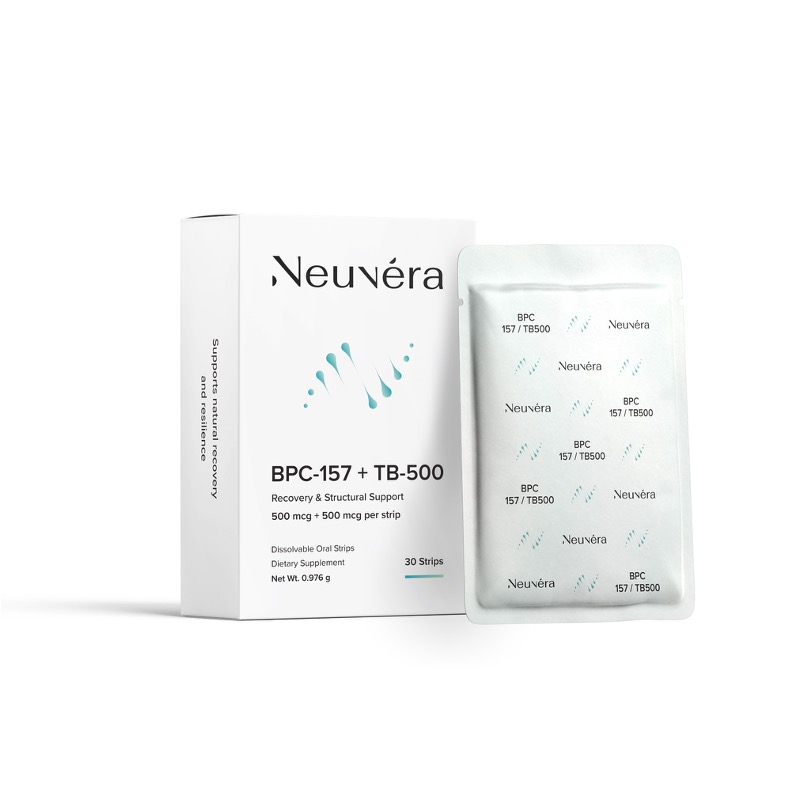
Neuvera provides BPC-157 and TB-500 in pre-measured oral dissolving strips, eliminating the need for needles.
That is what Neuvera builds around. Our oral dissolving strips deliver BPC-157 and TB-500 in a pre-measured single dose that dissolves on the tongue, with 92.5 percent absorption, no needles, no mixing, and no refrigeration. Shop our Neuvera strips and see how simple your daily wellness routine can be.
Frequently Asked Questions (FAQs)
Did the FDA approve BPC-157 in July 2026?
No. The FDA did not approve BPC-157 in July 2026. The Pharmacy Compounding Advisory Committee voted 8 to 6 to recommend that BPC-157 be considered for inclusion on the Section 503A bulk drug substances compounding list. That is a recommendation to the FDA, not a drug approval, not a product authorization, and not a safety certification. The FDA still needs to take its own formal regulatory action before anything changes.
What is the difference between a compounded drug and an FDA-approved drug?
An FDA-approved drug has completed the full pre-market approval process, including Phase I, II, and III clinical trials, chemistry and manufacturing controls review, and a formal FDA evaluation of safety and efficacy data. A compounded drug is prepared by a licensed pharmacist or physician for a specific patient based on a prescription, using bulk drug substances that meet certain regulatory criteria. It does not require the same pre-market approval process.
Will BPC-157 ever receive full FDA approval as a drug?
That outcome is possible but would require a pharmaceutical company or research institution to sponsor and complete the full New Drug Application process, including well-controlled human clinical trials demonstrating safety and efficacy for a specific indication. What is certain is that the July 2026 advisory vote moved the conversation forward without resolving the full-approval question.
Are Neuvera Products Safe for Daily Use?
Neuvera’s products are designed for daily wellness routines. Our oral dissolving strips and topical skincare are built for consistent, everyday use as part of your routine, not as a clinical intervention. As with any wellness product, we recommend consulting a qualified healthcare professional before starting a new routine.
*Disclaimer: The information in this article is for general informational purposes only and is not intended as medical advice, diagnosis, or treatment. Neuvera's products are not pharmaceutical products. Individual results may vary. Always consult a qualified healthcare professional before starting any new wellness routine.
Written by Cody Nickson
READY TO CHOOSE?
Find your daily strip routine.
Answer one simple question: what are you building around? Then compare Neuvéra routines by goal.