
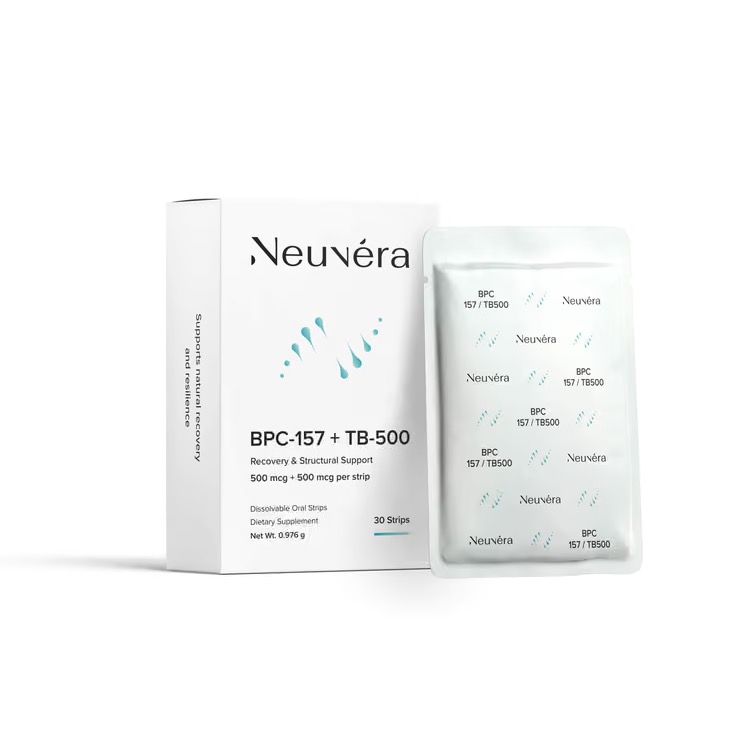
4 Best Peptides for Injury Recovery in 2026
Compare the best peptides for injury recovery in 2026, from BPC-157 to Ipamorelin, and see why Neuvera delivers them as oral dissolving strips instead of injections.
Key Takeaways
BPC-157, TB-500, CJC-1295, and Ipamorelin are four study-backed peptides often discussed for recovery support, each working through a different pathway.
BPC-157 supports the signaling your body already uses at the tissue level, while TB-500 helps move repair cells toward the area that needs them.
CJC-1295 and Ipamorelin sit one step upstream, supporting growth hormone output to improve the conditions recovery depends on, and are typically taken as a pair.
How you take peptides matters as much as which ones you choose, since consistency drives results and needles create barriers to daily use.
Neuvera delivers all four as oral dissolving strips with 92.5% absorption, so a daily dose takes seconds with no needles or clinic visits.
A Peptide Only Works If You Actually Take It Every Day
Choosing the best peptide matters, but so does how you take it. Most recovery peptides have historically required subcutaneous injections, which means needles, refrigeration, and either a clinic appointment or a self-injection routine at home. That friction is why many people start a peptide protocol and stop within weeks, long before consistency can produce results.
Oral dissolving strips change that equation. A strip placed on the tongue is absorbed through the soft lining of the mouth, bypassing the digestive system and delivering the peptide into the bloodstream in minutes. No preparation, no needles, no cold storage. That format makes daily use as simple as any other part of your morning routine, where recovery outcomes actually come from.
Neuvera delivers all four in two oral dissolving strips: BPC-157 + TB-500 and Ipamorelin + CJC-1295, so the peptide reaches your system without the barriers that break daily routines.
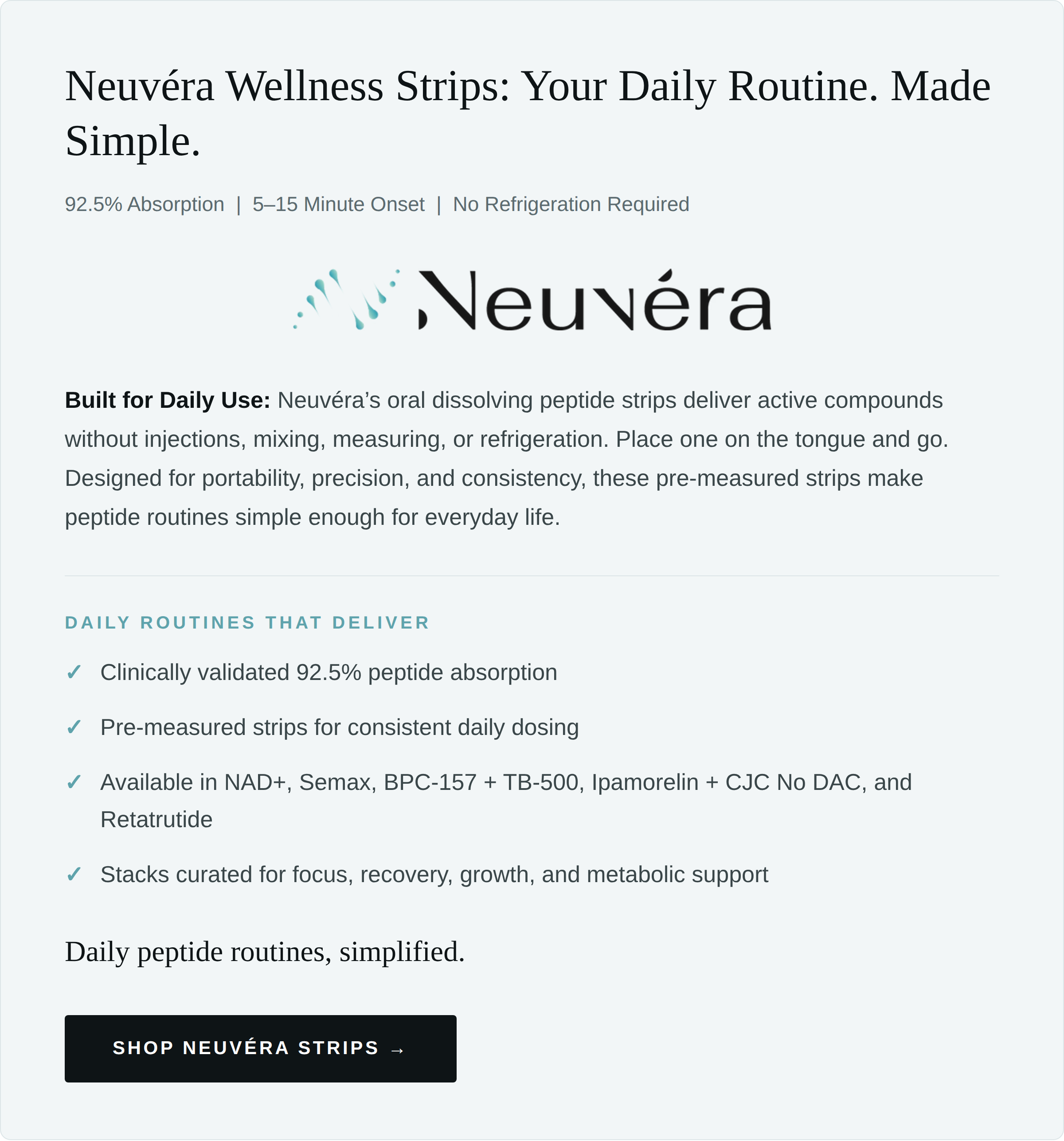
Top 4 Peptides for Injury Recovery
1. BPC-157
BPC-157, short for Body Protection Compound-157, is a synthetic peptide derived from a protein naturally found in human gastric juice. It's a 15-amino acid sequence that has become one of the most studied peptides in the context of musculoskeletal recovery. In animal studies, it has been shown to speed recovery in tendons, ligaments, muscles, and even bone.
BPC-157 works as a signaling peptide. It supports the signals your body already sends when tissue is damaged, helping keep the recovery process coordinated. This role supports tissue maintenance and structural balance, helping your body's repair processes run smoothly.
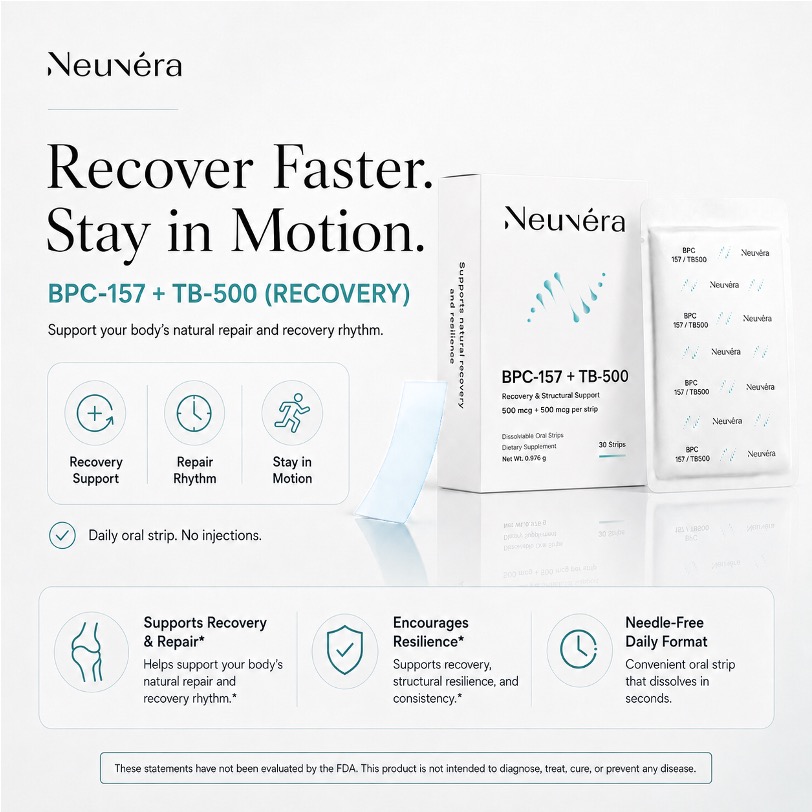
BPC-157 and TB-500 can support recovery.
2. TB-500
TB-500 is a synthetic fragment of thymosin beta-4, a 43-amino-acid protein your cells already produce. Its main job is to get repair cells moving. It calls them to the damaged area so they can start work.
TB-500 is associated with cell movement, which is how your body gets repair resources to the spot that needs them. That signaling helps those resources respond more efficiently. The result is support for tissue resilience and recovery you can see in everyday movement.
3. CJC-1295
CJC-1295 is a synthetic analog of growth hormone-releasing hormone (GHRH). In plain terms, it signals the pituitary gland to produce and release more growth hormone. That surge in growth hormone may directly affect tissue repair, collagen synthesis, and muscle recovery.
CJC-1295 works as a rhythmic peptide, and it comes in two forms. The short-acting version, Mod GRF 1-29, delivers a quick burst of growth hormone that matches your body's overnight repair rhythm. The long-acting DAC version keeps levels elevated for days. The short-acting form is generally preferred for preserving those natural pulses, since your body responds better to growth hormone in bursts than to a steady drip of the same amount.
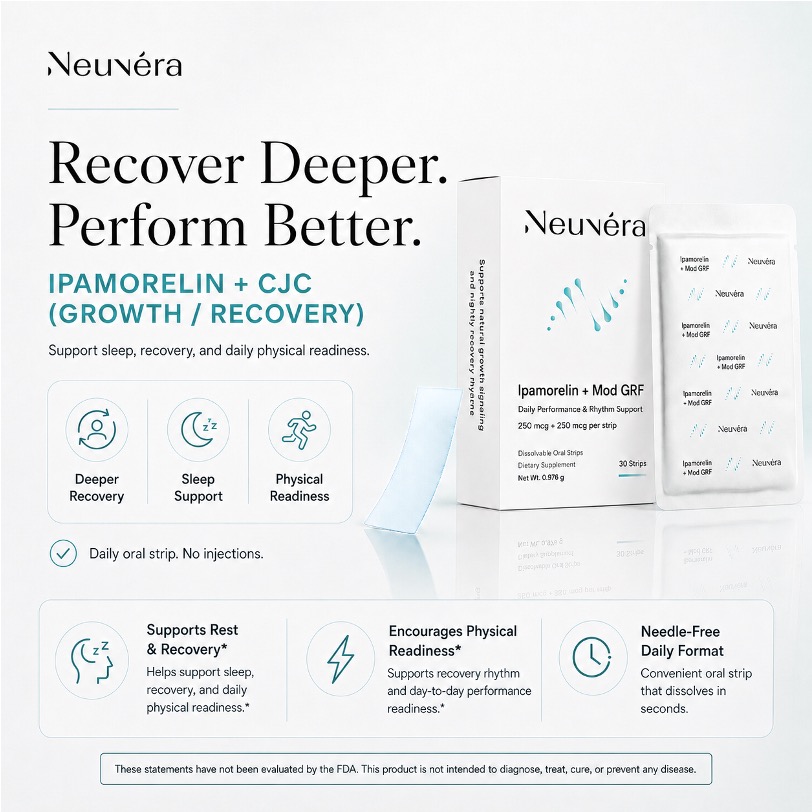
Neuvera’s daily wellness strips pair CJC and Ipamorelin in a single routine.
4. Ipamorelin
Ipamorelin prompts your body to release its own growth hormone. It does this through a different pathway than CJC-1295. Other compounds that raise growth hormone often stir up other hormones too, like cortisol. Ipamorelin mostly leaves those alone.
Ipamorelin supports the body's own growth-signaling pathways. It works selectively, targeting one specific pathway instead of triggering a broad hormonal response.
Peptides for Injury Recovery: Summary Table
Peptide | Best For | Best Delivery Method |
BPC-157 | Soft tissue recovery | Oral dissolving strips (sold as a combined BPC-157 + TB-500 strip) |
TB-500 | Soft tissue recovery and cell movement | Oral dissolving strips (sold as a combined BPC-157 + TB-500 strip) |
CJC-1295 | Repair through higher growth hormone | Oral dissolving strips as Mod GRF (CJC-1295 no DAC), paired with Ipamorelin |
Ipamorelin | Growth hormone support without wider hormonal shifts | Oral dissolving strips, stacked with Mod GRF (CJC-1295 no DAC) |
Add Neuvera to Your Wellness & Recovery Routine
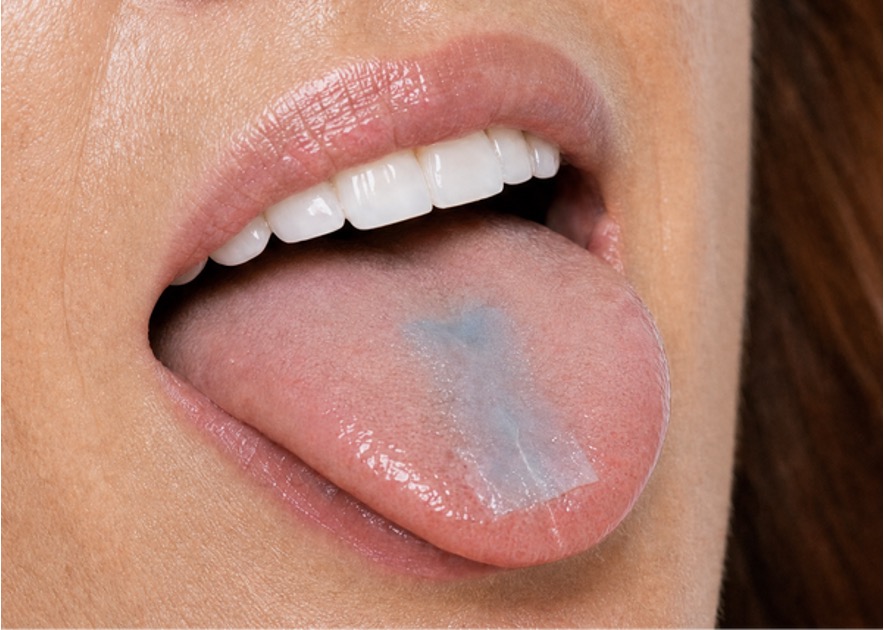
Neuvera’s daily wellness strips require no injections.
Recovery from injury takes time, and the peptide you choose shapes how you spend it. BPC-157 and TB-500 are meant to work directly on damaged tissue, while CJC-1295 and Ipamorelin support the hormonal conditions repair depends on. How you take them matters just as much.
At Neuvera, we make peptides easier to take consistently. Our oral dissolving strips skip needles and clinic visits, so a daily dose fits your routine without extra planning. Recovery rewards consistency. Browse our range of oral dissolving strips and choose the one that matches your recovery goal.
Frequently Asked Questions (FAQs)
Do peptides really work for injuries?
The research so far is encouraging. Peptides like BPC-157 and TB-500 appear to support the signals your body already uses to repair tissue, which is why they get so much attention in recovery circles.
What peptides are best for injury recovery?
BPC-157 and TB-500 are the two most discussed options for direct injury recovery. BPC-157 has the deeper animal literature on tendon, ligament, and muscle injury, while TB-500's evidence is strongest in wound and soft tissue repair. For broader hormonal support of the recovery environment, CJC-1295 paired with Ipamorelin is a commonly used combination.
Does BPC-157 heal torn ligaments?
Not on its own. BPC-157 may help speed recovery in tendons, ligaments, and muscles by supporting the repair signals your body already sends when tissue is damaged. Think of it as backup for your own recovery, not a replacement for proper medical care.
Who should not take peptides?
Skip growth hormone peptides if you have an active cancer of any kind, and clear it with your oncologist first if you have any history of cancer. Avoid them if you are pregnant, breastfeeding, or have a known allergy, and check with your doctor first if you take prescription medication.
What makes Neuvera's oral dissolving strips different?
Neuvera's oral dissolving strips use their novel RapidRelease™ technology. This means the strips dissolve in your mouth, so the peptide is absorbed through the soft lining instead of being injected. Referenced documentation reports a 92.5% peptide penetration rate, alongside a 5–15 minute onset window. That means no needles and no clinic visit, just a strip you can take anywhere.
*Disclaimer: The information in this article is for general informational purposes only and is not intended as medical advice, diagnosis, or treatment. Neuvera's products are not pharmaceutical products. Individual results may vary. Always consult a qualified healthcare professional before starting any new wellness routine.
Written by Cody Nickson
READY TO CHOOSE?
Find your daily strip routine.
Answer one simple question: what are you building around? Then compare Neuvéra routines by goal.